Jan 21 2010

Padel, Thematic, Cathedral

There was an element of theatre in Ruth Padel’s reading of her poems. Not only did she bring alive the narrative charge of her poems but she also did different voices for the characters in her poems, usually Darwin or his wife since she was mostly reading from Darwin: A Life in Poems. The book is an unusual and ambitious project but the poems she read were not groaning under the weight of the lofty idea. They were tender, humourous, down-to-earth, and they made Darwin more human which is not easy to do with legends. Some are available here.

Disappointingly (but expectedly), the Q&A session after the reading had few questions on poetry. Darwin, spirituality and conservation vied for attention, and obviously more people are interested in these than in poetry. I think there were one or two interesting questions about whether she would ever turn (return) from science towards poetry. The unsaid words here were ‘real’, ‘normal’, something like that. I may be paraphrasing this badly but I think the attempt was to understand whether she would move away from the specific themes she’s been attached to so far, whether she would ‘free’ her poetry to go where it will.

So is themed poetry restricted in some way? Is poetry directed towards a cause glancing away from other areas of truth it could discover? On the other hand, judges on award panels seem to think that big concerns are important for poetry. Re: Judge’s comments on Philip Gross winning the TS Eliot Prize for The Water Table and Roddy Lumsden’s comments on that.

Does anyone else have a problem with this preference for themed books as opposed to miscellanies. Surely that’s an American thing, arc and concept and all? I’m happy with either, but claiming it as a strength which goes towards a prize win is odd, no?

Ditto with ‘big concerns’ – are we giving prizes for ‘big concerns’ now? Big concerns, whatever they are, are great, but surely not a reason to award a prize?

So which side of the fence are you on?

Back to Padel: some of us got to meet her the next day for an informal discussion and lunch,  a generous three hours during which the questions were more focused. We talked about some nitty-gritty stuff like craft and performance but it didn’t graduate to a very evolved discussion on poetics. I’m not sure why. The time was probably short and the group a bit diverse (playwrights, fiction-writers, poets). She clearly believes in modernist ideas of compression, avoiding abstractions and so on. I would’ve been interested to know how she responds to poetry written in a very different aesthetic. Or what she feels about Language poetry, which is more recent.

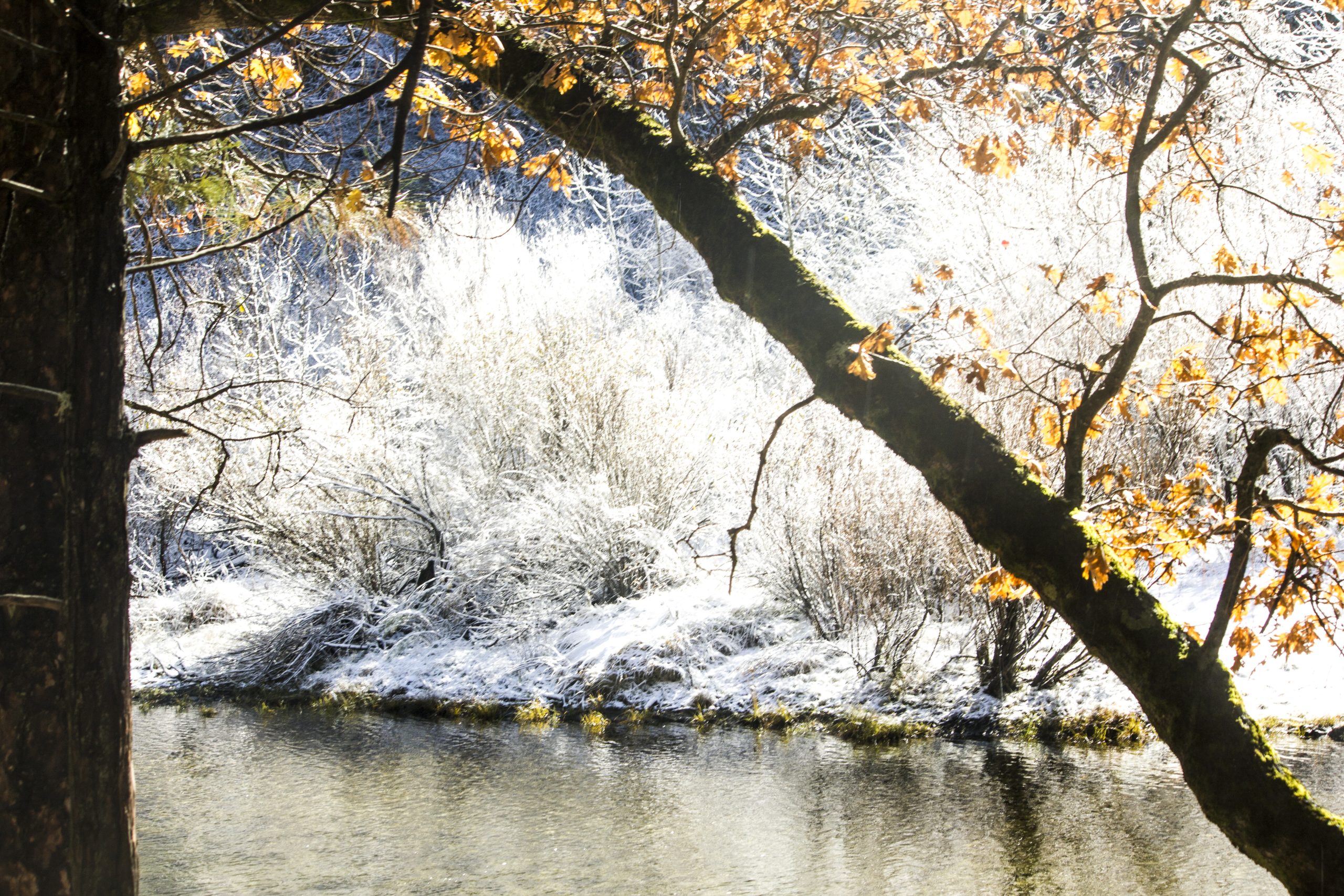
Anyway, relatedly, I’ve started my three months of poetry-and-not-much-else at the University of Kent. The room is all tidy lines, the air outside is crisp and cold, my fingers have not frozen yet. The snow has stopped but there are some meager patches of it lying around. The quiet is so big I could float in it.

I’m thrilled to have access to books we normally don’t get in India. The high point of my day was reading Don Paterson’s Nil Nil at an English pub outside the cathedral. The picture of the cathedral is a bit blurry because my hands had gone numb in the cold.


Jan 2 2010

Ostrich, Resolution

IMG_8811

Revisit notions of beauty and ugliness–all notions, actually–plus get my head out of the sand and not plunge it back there again. This is the closest I’m going to come to a new year resolution. Of sorts (, out of sorts). Last year, it was consistency and balance and I’m happy to reminisce that I’ve almost been successful. When I’ve eaten, drunk or slept too much (or too little), slept and woken at odd hours, been workaholic or too-lazy, been extreme in other words, at least I’ve pursued one end consistently for many days. And then the opposite for an equal number of days. Which balances it out in the end, I suppose.

So there it is for 2010: revisiting and clear-eyedness. This ostrich, which is ugly or beautiful depending on how you look at it and does not have its head buried in the sand, is a mascot.

Oh, and I hope y’all noticed how I’ve done some dusting and cleaning around here with categories and links. This look, I think, will stay for a while. I’ve been playing around with it too much and there’s no reason to give up on consistency just because the year’s over.

Happy 2010! :)


Nov 30 2009

Postcards from Amritsar: Golden Temple

This is at one remove–a substitute
For final answers. But the wise man knows
To cleave to the one living absolute
Beyond paraphrase, and shun a shrewd repose.

~ Derek Mahon, Preface to a Love Poem

IMG_9021

IMG_9040

Impossible to look directly into
another’s eyes. Impossible to look
into your own. You read the dense book
of being like a document you flick through.

~ George Szirtes, Rough Guide

IMG_9023

IMG_9025

You made me wait for one who wasn’t even there
though summer had finished in that tourist land.
Do the blind hold temples close to their eyes
when we steal their gods for our atheist land?
~ Agha Shahid Ali, Land

IMG_9058

IMG_9134

We are faithful
only to the imagination. What the
imagination
seizes
as beauty must be truth. What holds you
to what you see of me is
that grasp alone.

IMG_9116


Nov 23 2009

Postcards from Amritsar: Durgiana

The entry is the usual narrow lane crammed with shops selling kadas, rudraksha necklaces, brass artifacts, flowers, garlands, sweets. Jumbles of colour. Women haggling over fake gold rings. Boys clanging dekchi lids. Frothy lassi being poured into glasses. The lane opens out suddenly into a temple compound, a clear white space. Neat counters where you can keep shoes or get prasad. An automatically replenishing puddle for people to wash their feet. And a small shrine of Durga. Through a gate is the main temple. It’s built in the middle of a lake.

IMG_8983

And it’s very gold-infused.

IMG_8982

On a weekday morning, it’s relatively quiet. A few boys clang the bells with more enthusiasm than devotion warrants and a Bengali family stands around, commenting on…well, everything. I find it amazing how Bengali travelers are everywhere, jabbering on in Bangla, confident that nobody understands and therefore indulging in happy, private conversations, mostly about food.

The idols in the inner sanctum glitter fiercely gold. I find it hard to muster up devotion for gods who look like wealthy businessmen kids dressed up for their own wedding. In front of them, two children — a boy and a girl — sit on makeshift thrones, dressed up as gods. They look like they have to sit there all morning, possibly all day, squirming in their prickly, fake-gold crowns, their flaming orange outfits. Bengali woman says to daughter who looks about eight: See Radha-Krisha! Do you want to be? Radha-Krishna? Daughter looks utterly bemused.

IMG_9001

I walk around the temple, looking at the beautiful doors and some very interesting statues enclosed in glass which depict scenes from the Ramayana.

IMG_8987

IMG_8995

At the back, I find Shiva. He’s spouting water from his head and this, I now realise, is what is supposedly creating the lake. The Ganges in miniature. A friendly priest says I must have the holy water. He looks pained that I can even consider not doing so. I frown and think of dead fish and human spit. I like Shiva. I really do. He’s the coolest in the pantheon. But I’m sure he’ll forgive me my fussy drinking habits.

IMG_8988

Outside, the temple guard looks disturbed when I’m about to leave. It turns out I haven’t seen the other temple, the Durga temple. This must be what the place gets its name from. He points me down a narrow lane, looking pleased at having done his good deed for the day. The lane smells vaguely of cow dung and construction debris but is relatively clean. This temple is simpler, nicer somehow. There’s something stark about the trishul as an object of worship.

IMG_9003

There is a gigantic tree in the courtyard, encircled with yards and yards of red and yellow string, years of prayer wound around it like a noose. At the back, there are two large walls covered with story panels on Hanuman’s life. Quite a labour of love.

IMG_9007_b

IMG_9006

On my way back through the lane, I pass a large room which seems bare and purposeless, almost a place for the priests to generally hang out. In one of the alcoves, a girl sits studying the scriptures. She looks very peaceful. And perhaps,
she is.

IMG_9008


Jul 29 2009

Landslides, bus rides and the sea

July’s been terribly hectic, in terms of actual activity as well as inner shifts, and the blogging always suffers at such times. First there was the very rushed, very rainy trip to Goa. For once (oh irony!), I actually managed to fall asleep on the train, only to be woken up at 8 am and told that the train was not going any further. We were in Hubli. Landslides had blocked our way into Goa.

What struck me is this — there was no announcement on a PA system, no officials busily informing passengers what to do. Everything worked on word-of-mouth, each passenger telling the others, the news traveling from one end of the train to the other like a wave. I scrambled out of the bunk, followed the long file of groggy, excited passengers onto a rattle-trap bus. The journey was fun. The roads were beautiful and intermittent rain pearled the gigantic windshield. There was music on my iPod. There was Paul Auster’s The Book of Illusions when I bored of the landscape, which was seldom. There were excitable boys playing Dumb Charades with wild gesticulations. The woman next to me peeled bananas and chatted about her home in Margao, her IT-professional son in Bangalore, and her husband who refuses to go anywhere anymore. The TC accidentally dropped his clipboard on me and just missed goring one eye. For the rest of the trip, he gave me sheepish grins which I returned with the ‘I’m such a good person that I forgive you’ look. Such drama! If the journey had lasted much longer, it would have become a love affair.

img_8057

***

The string of buses stopped for brunch (dosa and sheera) at a wayside place just before Karwar. One of the passengers — a woman traveling alone — went to the loo and her bus left without her. She had not told anyone where she was going or that they should wait. She had not registered her presence in some manner — and it’s easy to be invisible when you’re alone. Anyway, she did the sensible thing of getting onto our bus. She seemed poor and elderly though she might have been middle-aged with the prematurely haggard look that hardship brings. She was frantic about her things left behind on the other bus. For the next four hours or so, she begged the TC to find out, cried intermittently, even struck her chest in worry and fear. I wonder what her bag contained. What possessions, what valuables, what earthly things. All her money for the journey? Jewels she had carried to some wedding? All the clothes she owns?

img_8050

Our TC called a few of the others but he clearly did not know all the numbers. Finally he told her she would have to travel to Vasco where all the buses would terminate, and then hunt for her bag. She asked if the buses would be traveling back to Margao where she wanted to get off. He said no. She looked stricken, realizing she would have to spend the extra money to get back on her own. For her, it was not a good journey.

***

I got off at Margao, took a cab to my hotel and got there at 4 pm, only two hours later than anticipated. The next two days were spent in sinful indolence and soul-baring talk (I was meeting my closest friend after years). Goa itself was beautiful — wetly green and fecund, bleak and stormy all at the same time. Palolem beach had one and a half shacks open and a straggle of kids playing football.

In one of the shacks, the deadpan manager turned out to be a lech, full of roving eyes and roving questions. I was short with him. My friend astutely pointed out that our food would now be laced with spit. We retreated to the other shack where the waiters were more discrete. We drank cocktails and ate king fish. All the beach dogs were inside to shelter from the rain. They nestled near our legs or sat at the edges of the shack like sentries, or dosed in small pits they had dug for themselves. The plastic sheets covering the shack flapped in the wind. The sand between our toes was dark and gritty. We talked about college and life, the last ten years and now. We watched the sea roil and seethe.

IMG_8045

IMG_8042

img_8056

I took a flight back to Bangalore because all trains on the southwestern route had been canceled. More landslides. So I didn’t have time to finish the second book I had taken along, Roberto Calasso’s The Marriage of Cadmus and Harmony. Oh, but instead, I used the extra time to lounge around the hotel. I saw a huge chess board with its horses dripping rain water. And I drank beer in a pool while it was pouring, my tiny spot covered by a gazebo while all along the rest of it, sharp needles of water rose upwards like steam. I’m not complaining.

img_8067